
In September 2025, NACFE worked with 13 fleets as well as OEM and numerous supporting suppliers to stage a demonstration on four powertrain solutions — diesel/renewable diesel, natural gas/renewable natural gas, battery electric and hydrogen fuel cell — currently being used in the long-haul segment of the trucking industry. The trucks operated across the U.S. and Canada.
The goal of Run on Less – Messy Middle was to bring clarity to the long-haul segment of the market. The purpose of this demonstration was to learn about the performance of heavy-duty Class 8 trucks — sleepers and day cabs — in long-haul return-to-base and over-the-road duty cycles.
While long-haul represents a small portion of the total trucking industry, it contributes a significant portion of emissions. If we are going to decarbonize trucking, we need to better understand the options available to fleets operating in that duty cycle and help them determine the powertrain solution that is best for their specific application.
NACFE’s mission is to help fleets invest in cost saving technologies that improve efficiency and reduce emissions. Taken together the three reports from Run on Less – Messy Middle on operations, total cost of ownership and emissions have brought clarity to long-haul. Using the three reports together should give fleet managers a clear path for making decisions on which efficiency technologies are best suited for their operation.
Click on an image to download the report.

View the Run on Less – Messy Middle Fleet Profiles here
View the Run on Less – Messy Middle Metrics here
View the Messy Middle Bootcamp trainings here
RESULTS BY FLEET
DATASET
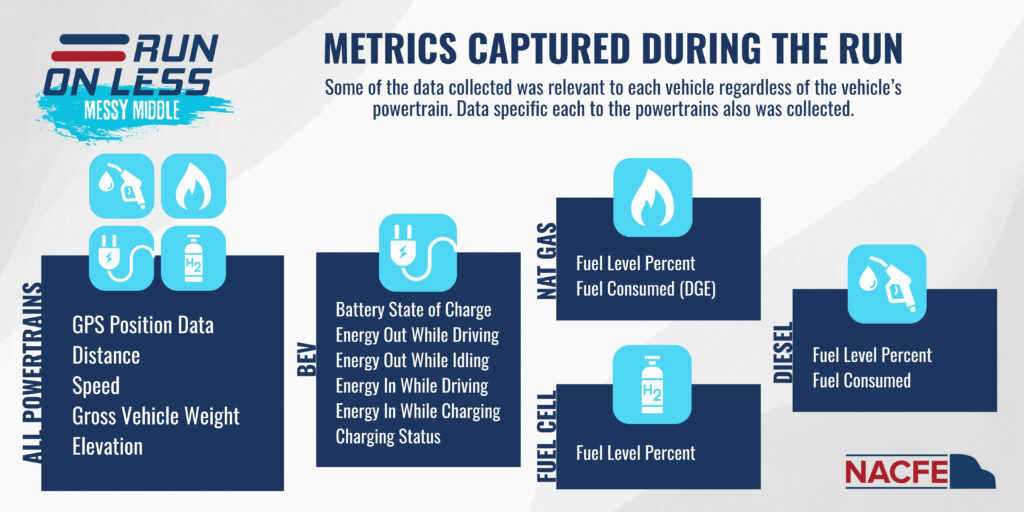
All trucks were tracked using Geotab technology capturing data points for all trucks and then specific data for each powertrain. The dataset is available for download below.